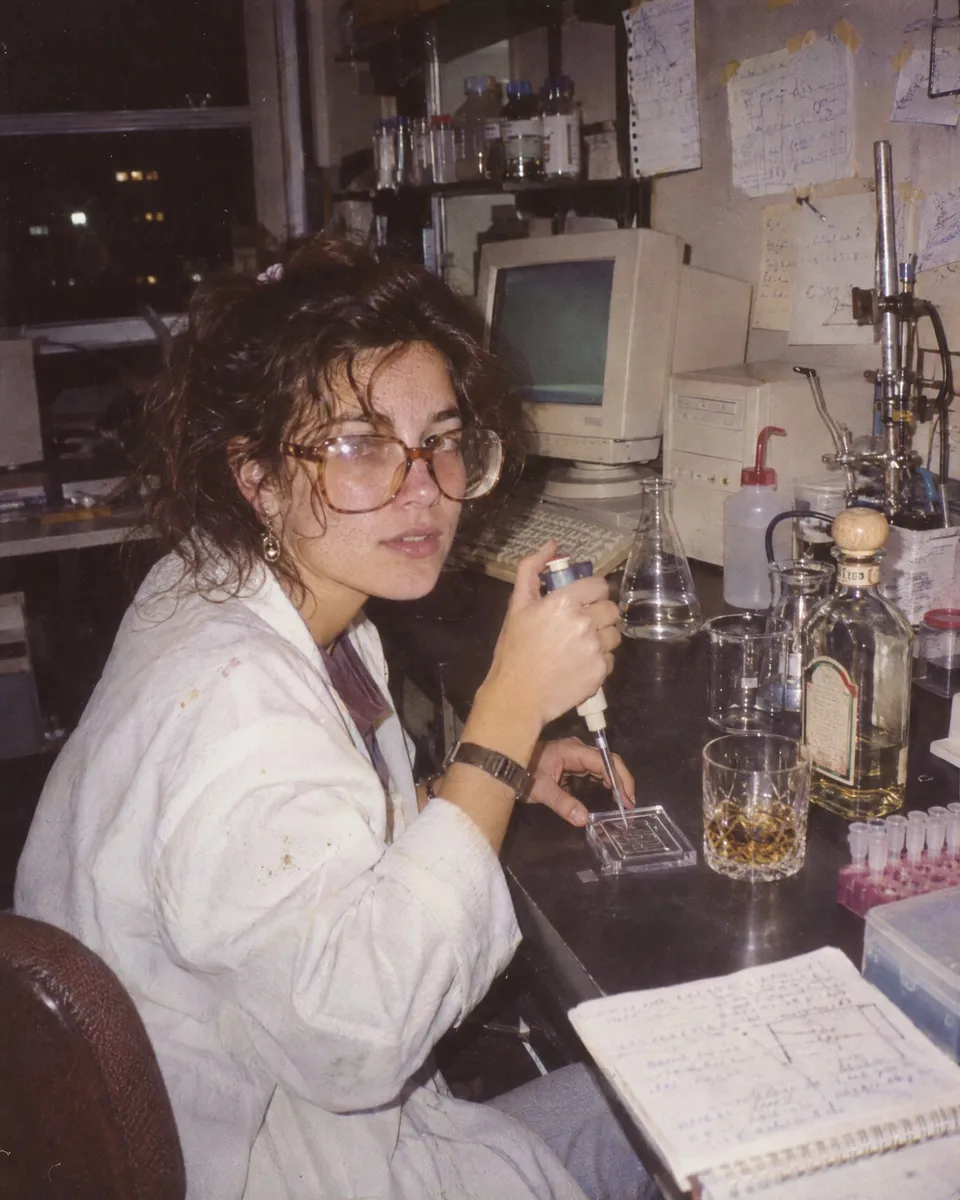


Researcher in glasses in a laboratory, next to a computer, flasks and bottles.
In development

ADVANCED
SCIENCE

An alert
to act in time.

Collaboration

Advanced Science is developing its first product
with Tecnológico de Monterrey.

THE OPPORTUNITY

We bring science to where the drink is served, at the moment it still holds the evidence.

01 Mexico is moving.

On June 6, 2026, a methanol-adulterated tequila killed five people and poisoned dozens more at a party in Salamanca, Guanajuato. The state Health Department asked COFEPRIS for a health alert on the case (Milenio, n.d.).

It is not an isolated case. In 2020 Jalisco's health authority documented an outbreak from methanol-adulterated alcohol in Tamazula and Mazamitla (Coprisjal, 2020), and in 2026 COFEPRIS warned about counterfeit and adulterated tequila bottles sold online (El Financiero, 2026).

The challenge is regional. In October 2025 the Pan American Health Organization warned of methanol poisoning outbreaks in at least five countries in the Americas between 2020 and 2025, and called for stronger surveillance and laboratory confirmation (PAHO & WHO, 2025).
02 From report to evidence.

The standard already sets the threshold. NOM-142-SSA1/SCFI-2014 limits methanol in non-fermented alcoholic beverages to 300 mg per 100 ml of anhydrous alcohol and refers to a Mexican gas chromatography standard to measure it (Secretaría de Salud & Secretaría de Economía, 2015).

Today that measurement happens in a laboratory. A suspicious bottle has to leave the venue to become evidence, and in the meantime the bar decides without data whether to serve it or pull it.

The technical challenge is real. Some traditional mezcals exceed the methanol limit without being adulterated (González Seguí et al., 2019), so a useful check must tell the drink's own methanol apart from adulteration.

03 A new generation of sensors.

Portable methanol detectors already exist. A pocket-sized one was published in 2020 (Abegg et al., 2020) and later validated across several laboratories (van den Broek et al., 2024). Portable Raman spectroscopy already measures methanol through the bottle (Ellis et al., 2019).

Glycols are the open frontier. Rapid methods for ethylene glycol and diethylene glycol were developed for syrups and pharmaceutical raw materials (Arman et al., 2025). In our review we found no tool designed for a venue's inventory receiving that looks for methanol, glycols and isopropyl alcohol at the same time.

That is where our development fits. Our goal is a sensor for real venue operations that looks for all four adulterants in a single reading, is blind-validated against the reference method and publishes each performance figure only once it is validated.

5

people died after drinking methanol-adulterated tequila in Salamanca, Guanajuato, in June 2026.

Source: Milenio and COFEPRIS health alert, June and July 2026.

55%

Up to 55% lower spirits sales in upscale bars and restaurants in São Paulo during the 2025 methanol crisis.

Source: Abrasel, cited by Cunha & Felix (Folhapress), October 2025.

Mexico is moving

From report to evidence

24

deaths in the Jalisco outbreak as of May 1, 2020, with 74 people affected.

Source: Coprisjal, 2020.

5

countries in the Americas, at least, had methanol poisoning outbreaks between 2020 and 2025.

Source: PAHO & WHO, 2025.

300

mg of methanol per 100 ml of anhydrous alcohol is the maximum for non-fermented alcoholic beverages.

Source: NOM-142-SSA1/SCFI-2014, section 5.4.

100

mg per 100 ml of anhydrous alcohol is the maximum for ethyl alcohol used as a raw material.

Source: NOM-142-SSA1/SCFI-2014, section 5.3.

Second product: multi-substance platform

The drink keeps
the evidence.

The drink keeps the evidence the body processes within hours, so we want to take the test to where the drink is.

  • Scopolamine
  • Eye drops
  • Benzodiazepines
  • Ketamine
  • GHB

04 The drink keeps the evidence.

Our second product will use the same platform to look for chemical submission substances. UNODC recognizes more than 50 substances used in drug-facilitated crimes, including GHB, benzodiazepines, ketamine and scopolamine, and warns that evidence in blood can be lost with a delay of one or two hours (UNODC, 2011). Covert administration is estimated at 2 to 22% of cases in the studies that assessed it (Skov et al., 2022).

In Mexico, cases documented by the media mention eye drops, benzodiazepines and barbiturates (Notimex, 2019; Fuentes, 2023), and Mexico City and Guerrero already penalize the covert administration of substances (Gobierno de la Ciudad de México, 2025; Gobierno del Estado de Guerrero, 2026).

Today's commercial tests leave room for a better answer. A kit with 100% accuracy in the lab reached 50% sensitivity in the field (Quest & Horsley, 2007), and a commercial coaster did not detect ketamine in drinks spiked at 150% of its detection limit (Germain et al., 2023). The drink is the only matrix in which the substance is not metabolized, so we want to bring a validated test to it before offering it.

48 h

is the preferred window for drawing blood. For urine it is 120 h.

Source: UNODC, 2011.

3 to 10 h

is the detection window for GHB in urine.

Source: Busardò & Jones, 2015.

How we design the device.How we design
the device.

Three ways to take the reading to where the drink is. Tap each format.

4

adulterants we aim to detect in a single reading: methanol, ethylene glycol, isopropyl alcohol and diethylene glycol.

Design goal, not a result. Every performance figure is published once it is validated against the lab.

FORMAT 01

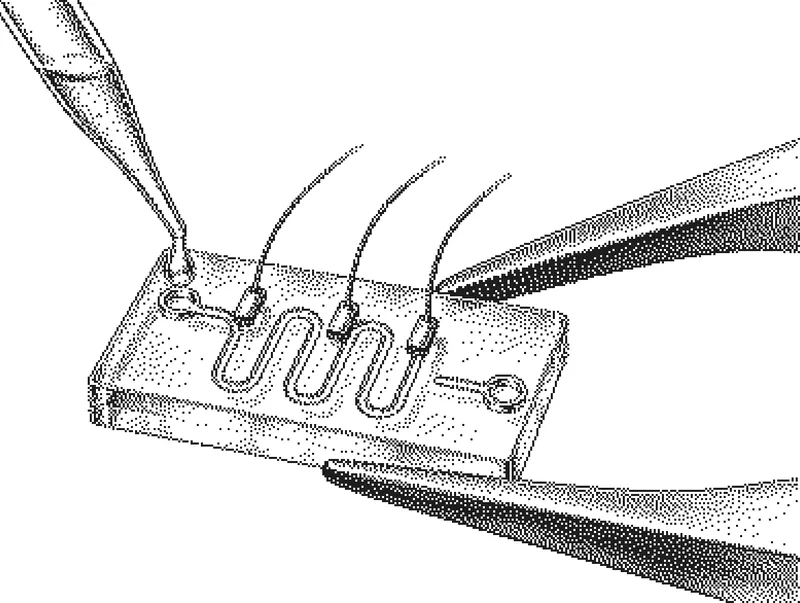
Illustration of a microfluidic chip held with tweezers while a pipette drops in a sample.

Cartridge with reader.

Venues, authorities and brands

On-site reading with a pocket reader. It is the foundation of the development.

Formats being explored with Tecnológico de Monterrey.

Open format

Table 1

ComponentDesign implication
LocationThe point of use is inventory receiving and the bar, with venue staff.
TimeGet a reading in minutes and set the bottle aside for confirmation.
SubstancesFour target adulterants: methanol, ethylene glycol, isopropyl alcohol and diethylene glycol.
Current toolA sensor designed for venue operations, blind-validated against the reference method.
Conditions of useCompare every reading against the fingerprint of the unadulterated drink.
DataOur own anonymous event log.
Consequence of errorPresumptive result, with lab confirmation.

Table 1. Components of the first product's challenge and their design implications. Source: People Intelligence, November 2026.

Table 1

ComponentEvidenceDesign implication
LocationCOFEPRIS's 2026 alerts refer to counterfeit bottles that reached the market (El Financiero, 2026). Venues receive and serve those bottles.The point of use is inventory receiving and the bar, with venue staff.
TimeToday methanol is confirmed by gas chromatography in a laboratory (Secretaría de Salud & Secretaría de Economía, 2015).Get a reading in minutes and set the bottle aside for confirmation.
SubstancesThe standard limits methanol (Secretaría de Salud & Secretaría de Economía, 2015). Ethylene glycol and diethylene glycol are tested today mainly in syrups and raw materials (Arman et al., 2025).Four target adulterants: methanol, ethylene glycol, isopropyl alcohol and diethylene glycol.
Current toolPortable methanol detectors validated across laboratories (van den Broek et al., 2024) and Raman through the bottle (Ellis et al., 2019).A sensor designed for venue operations, blind-validated against the reference method.
Conditions of useSpirits vary in color, sugar and alcohol content, and some mezcals exceed the methanol limit without adulteration (González Seguí et al., 2019).Compare every reading against the fingerprint of the unadulterated drink.
DataWe found no consolidated national figure for methanol poisonings. PAHO calls for stronger surveillance (PAHO & WHO, 2025).Our own anonymous event log.
Consequence of errorA false negative lets a dangerous bottle through and a false positive pulls a legitimate one.Presumptive result, with lab confirmation.

Table 1. Components of the first product's challenge and their design implications. Source: People Intelligence, November 2026.

How to read the alert

AN ALERT TO ACT ON.

  1. 1AlertThe bottle is set aside and sent to the lab.
  2. 2To be confirmedThe test is repeated and, if it holds, it goes to the lab.
  3. 3No alertThe reading stayed within its range. Formal confirmation comes from the lab.

We read on site. We confirm in the lab.

Presumptive screening criteria: SWGDRUG recommendations.

the sage

Curious to understand how the trick happened and what would change if we tried again.

Research question

What requirements must a low-cost microfluidic device meet to check spirits in a venue's real operation, how is it validated against the reference method, and how are its development and validation divided between Tecnológico de Monterrey and People Intelligence?

Magic is imagination with a method.Magic is
imagination
with a method.

References.

Sources cited on this page, taken from the People Intelligence reference database (November 2026).

542

sources reviewed for this development, including articles, standards, health alerts and patents.

Source: People Intelligence reference database, November 2026.

Card 01

Abegg, S., Magro, L., van den Broek, J., Pratsinis, S. E., & Güntner, A. T. (2020). A pocket-sized device enables detection of methanol adulteration in alcoholic beverages. Nature Food, 1(6), 351-354. https://doi.org/10.1038/s43016-020-0095-9

Card 02

Arman, B. Y., Legge, I., Walsby-Tickle, J., Bharucha, T., Gabel, J., Gnegel, G., Deats, M., Banerjee, S., Stokes, R., Merchant, H. A., Matousek, P., McCullagh, J., Caillet, C., Newton, P. N., Zitzmann, N., & Gangadharan, B. (2025). Rapid screening of ethylene glycol and diethylene glycol in raw materials and medicinal syrups using low-cost field deployable assays. Scientific Reports, 15, 39737. https://doi.org/10.1038/s41598-025-26670-1

Card 03

Busardò, F. P., & Jones, A. W. (2015). GHB pharmacology and toxicology: Acute intoxication, concentrations in blood and urine in forensic cases and treatment of the withdrawal syndrome. Current Neuropharmacology, 13(1), 47-70. https://doi.org/10.2174/1570159X13666141210215423

Card 07

Ellis, D. I., Muhamadali, H., Xu, Y., Eccles, R., Goodall, I., & Goodacre, R. (2019). Rapid through-container detection of fake spirits and methanol quantification with handheld Raman spectroscopy. Analyst, 144(1), 324-330. https://doi.org/10.1039/C8AN01702F

Card 09

Germain, M., Desharnais, B., Motard, J., Doyon, A., Bouchard, C., Marcoux, T., Audette, E., Muehlethaler, C., & Mireault, P. (2023). On-site drug detection coasters: An inadequate tool to screen for GHB and ketamine in beverages. Forensic Science International, 352, 111817. https://doi.org/10.1016/j.forsciint.2023.111817

Card 10

Gobierno de la Ciudad de México. (2025, May 30). Decreto por el que se adicionan un Capítulo III Ter Administración subrepticia de sustancias al Título Primero Delitos contra la vida, la integridad corporal, la dignidad y el acceso a una vida libre de violencia del Libro Segundo Parte Especial, y un artículo 141 Quáter, todos del Código Penal para el Distrito Federal. Gaceta Oficial de la Ciudad de México, 4. https://paot.org.mx/centro/codigos/df/pdf/2025/GOCDMX_30_05_2025.pdf

Card 12

González Seguí, H. O., Hernández López, J. J., & Giersiepen, J. H. (2019). Metanol: tolerancias y exigencias en las normas para mezcal y bebidas de agave. Revista RIVAR, 7(19), 1-21. https://doi.org/10.35588/rivar.v7i19.4246

Card 16

Quest, D. W., & Horsley, J. (2007). Field-test of a date-rape drug detection device. Journal of Analytical Toxicology, 31(6), 354-357. https://doi.org/10.1093/jat/31.6.354

Card 18

Skov, K., Johansen, S. S., Linnet, K., & Nielsen, M. K. K. (2022). A review on the forensic toxicology of global drug-facilitated sexual assaults. European Review for Medical and Pharmacological Sciences, 26(1), 183-197. https://doi.org/10.26355/eurrev_202201_27767

Card 21

van den Broek, J., Keller, S. D., Goodall, I., Parish-Virtue, K., Bauer-Christoph, C., Fuchs, J., Tsipi, D., Güntner, A. T., Blum, T., Mathurin, J.-C., Steiger, M. G., Shirvani, R., Gössinger, M., Graf, M., Anderhub, P., Z’graggen, D., Hüsser, C., Faigle, B., & Agapios, A. (2024). Handheld methanol detector for beverage analysis: Interlaboratory validation. Analytical Methods, 16(24), 3859-3866. https://doi.org/10.1039/D4AY00919C

APA 7 format. News reports on cases with identifiable victims are cited without the person's name.

References21

APA 7 format. News reports on cases with identifiable victims are cited without the person's name.

Are you an authority,
a brand or a lab?

Let's build the next generation of sensors for nightlife together.

Contact us
ADVANCED SCIENCE
Office desk with an old computer, stacks of paper, an orange lamp and a pair of boots on the table.
Microfluidics Lab

Cookie settings

Choose which cookies you accept. You can change it anytime from “Cookie settings” in the footer.

Necessary Always active

They store your cookie choice and keep the site working. Set by People Int.

Analytics Google Analytics 4

Measures visits and site usage in aggregate. Cookies _ga and _ga_<ID>, last up to 2 years.

Marketing Meta Pixel

Measures and personalizes ads on Instagram and Facebook. Cookies _fbp and _fbc, last 90 days.

More details in the Cookie policy and the Privacy notice